The True Cost of Missing an ADAS Calibration
Missing a required ADAS calibration can impact more than just a repair. It can affect vehicle safety, reduce shop profitability, and create unnecessary liability.
Posted: August 6, 2026
Author: Jaden Shah
Introduction
Advanced Driver Assistance Systems (ADAS) are designed to help prevent accidents and keep drivers safe. Features like Automatic Emergency Braking, Lane Keep Assist, Adaptive Cruise Control, and Blind Spot Monitoring have become standard on many of today's vehicles. That also means collision repairs have become more complex than ever.
When a vehicle comes into your shop, the goal is simple. Return it to the customer in the same safe condition the manufacturer intended. That is why identifying every required ADAS calibration matters.
Missing a required calibration is about much more than checking a box. It can affect vehicle safety, expose your shop to liability, create unnecessary comebacks, delay insurance payments, and leave revenue on the table from operations that were never identified or billed.
Vehicle Safety Comes First
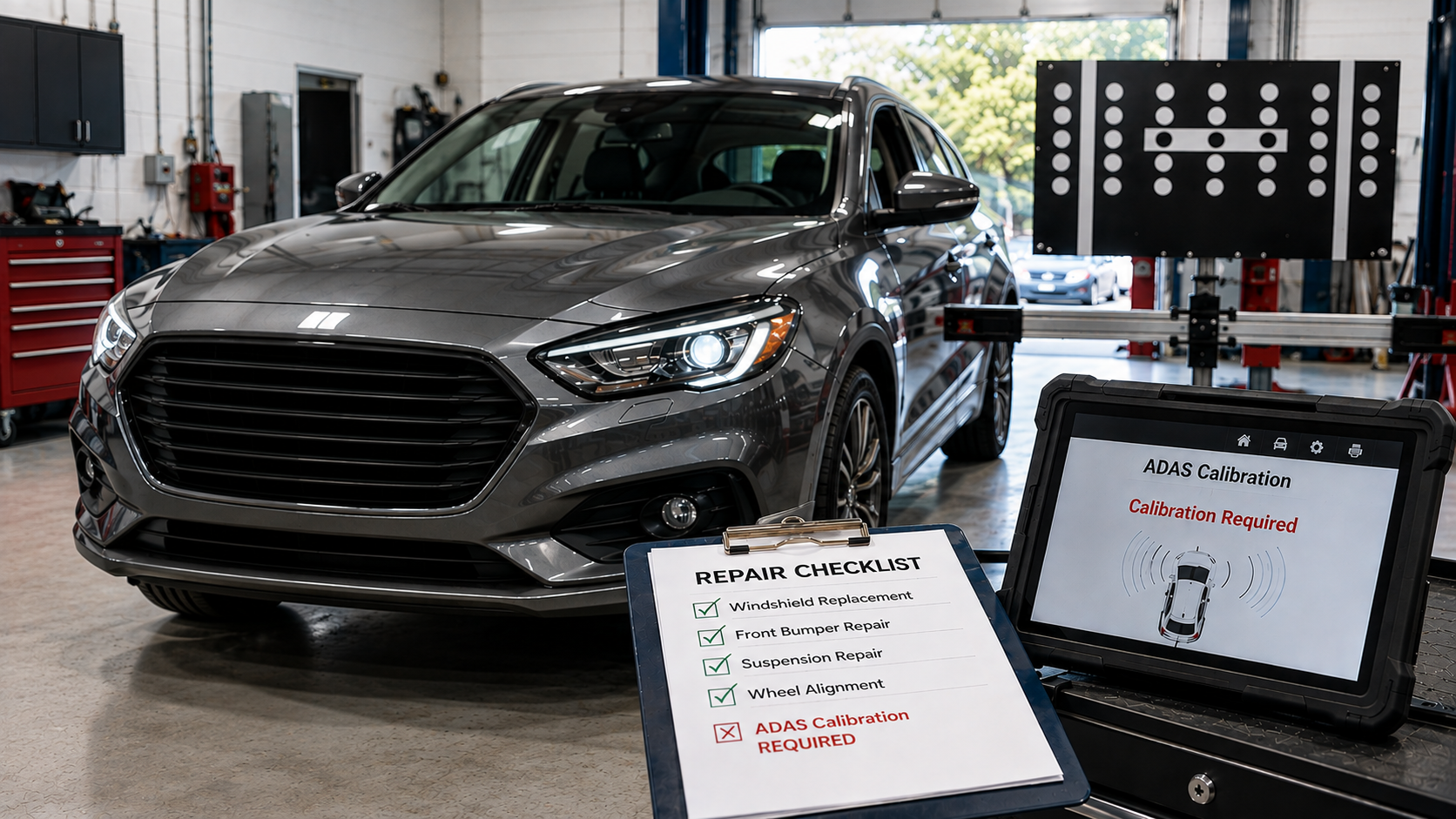
ADAS cameras, radar sensors, and other components have to be positioned with incredible precision. Something as common as replacing a windshield, removing a bumper, repairing suspension components, or completing structural repairs can be enough to require an OEM calibration.
If that calibration is missed, the vehicle's safety systems may not respond the way they were designed to. A camera that is only slightly out of alignment can affect systems like Automatic Emergency Braking or Lane Keep Assist when the driver needs them most.
That is why OEM procedures exist. They help ensure the vehicle leaves your shop operating the way the manufacturer intended.
The Costs Add Up Quickly
The biggest cost of a missed calibration is one that cannot always be measured.
Customers trust your shop to repair their vehicle correctly and return it in safe, road ready condition. If a required calibration is overlooked, important driver assistance systems may not perform as intended.
Beyond safety, missed calibrations can create a ripple effect throughout the repair process. Shops may lose billable operations, experience unnecessary comebacks, face payment delays, and increase their exposure to liability.
Lost Revenue
One of the most overlooked costs of a missed calibration is lost revenue.
If a required calibration is not identified during blueprinting or estimating, there is a good chance it never makes it onto the estimate. That means the shop may never bill for the calibration itself, related pre and post repair scans, OEM documentation, or associated labor and sublet services.
Across dozens or even hundreds of repairs each year, those missed operations can add up to thousands of dollars in revenue that should have been captured.
Comebacks, Delays, and Liability
Discovering a missed calibration after the customer has already picked up the vehicle creates problems for everyone.
The customer has to return, technicians have to stop what they are doing to revisit completed work, and production schedules are interrupted. Those are hours that could have been spent completing the next repair.
Insurance carriers also continue to expect proper ADAS documentation. Missing or incomplete documentation can lead to supplements, payment delays, and unnecessary conversations during the claims process.
If a vehicle is later involved in an accident, repair documentation may become part of the investigation. Following OEM procedures helps demonstrate the repair was completed according to manufacturer requirements and helps reduce unnecessary liability.
Why Missed Calibrations Happen
ADAS requirements are not always obvious.
A calibration may be required after a windshield replacement, bumper repair, suspension repair, wheel alignment, structural repair, camera replacement, radar replacement, or even a battery disconnect on certain vehicles.
Requirements also vary by manufacturer, model, trim level, model year, and the type of repair being performed.
Expecting estimators or technicians to remember every possible calibration requirement simply is not realistic.
Start Every Repair with OEM Procedures
Every manufacturer publishes repair procedures that specify when ADAS calibrations are required.
Checking OEM procedures before repairs begin helps ensure required calibrations are identified, vehicles are repaired according to manufacturer specifications, documentation supports insurance claims, and every billable ADAS operation is captured.
Taking a few extra minutes to verify requirements early in the repair process can save hours of rework later.
A Better Process Makes All the Difference
As more vehicles enter the shop with ADAS, having a consistent process for identifying calibration requirements is just as important as having the right equipment.
Identifying required calibrations during blueprinting or estimating helps eliminate missed operations, improve documentation, capture additional revenue, and most importantly, return safer vehicles to customers.
That is where ADAS Find helps.
ADAS Find gives collision repair shops a faster, more reliable way to identify OEM required ADAS calibrations before repairs begin. With quick access to manufacturer procedures and insurance ready documentation, shops can confidently identify required operations, support insurance claims, and capture every billable calibration.
Final Thoughts
The true cost of missing an ADAS calibration is not the price of the calibration itself.
It is the possibility of returning a vehicle with safety systems that may not function as the manufacturer intended. It is the lost revenue from operations that were never identified. It is the comeback that ties up technicians for work that should have been completed the first time. It is the delayed insurance payment, the increased liability, and the customer who questions the quality of your repair.
ADAS Find helps shops take the guesswork out of the process by identifying OEM required calibrations before repairs begin, providing quick access to manufacturer documentation, and making it easier to capture every billable operation while supporting proper documentation.
At the end of the day, every vehicle deserves to leave the shop with its safety systems functioning the way the manufacturer intended. Having the right process helps protect your customers, your technicians, and your business.